
A Beginners' Guide to British Hedgerow Foraging
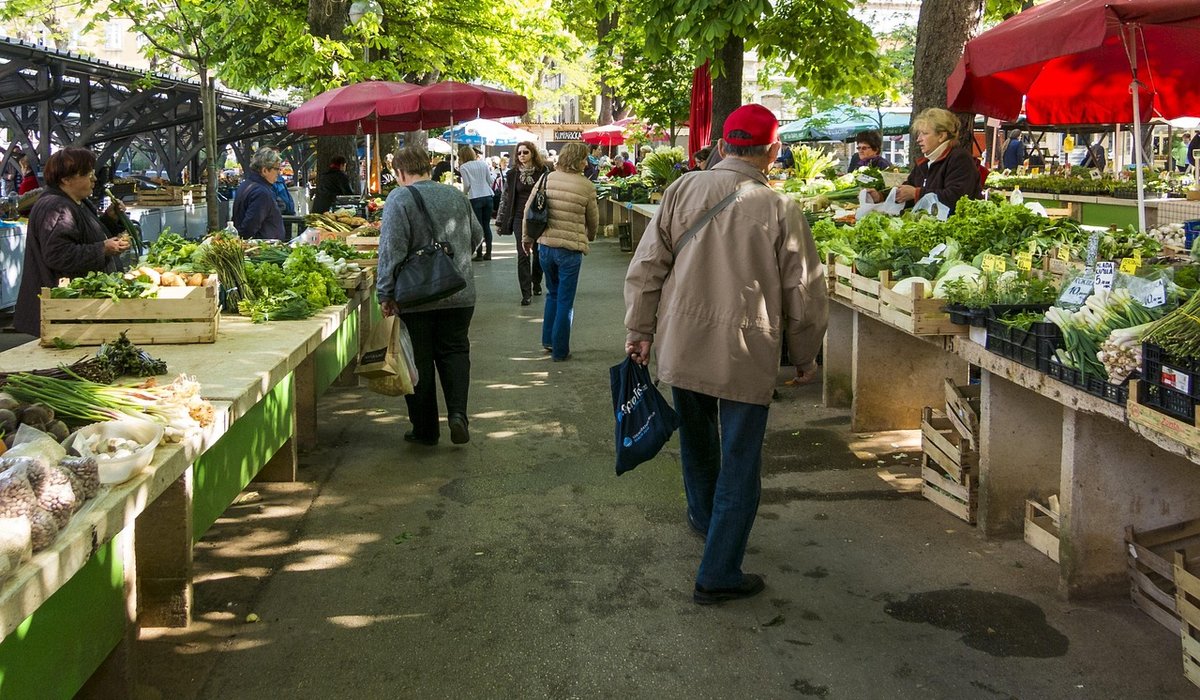
Why the Cheese Stall Rewards a Conversation
A good market cheese stall is not a shop so much as a small archive of the British countryside. Cloth-wrapped rounds stacked on the counter, a tray of crumbly white wedges, a blue with a chalky rind and a smell that reaches you before the stall does. The person behind it has usually cut, wrapped and argued about these cheeses all week, and they will happily tell you why the piece you are pointing at tastes the way it does.
The trick is to ask about three things: milk, age and pairing. Those questions turn a nice purchase into a piece of local knowledge you can carry to the next market, and the next county. Start with something like: "Which of these is the youngest, and what does the older one taste like?" You will get a more useful answer than any label can give you.
Lancashire: Learning to Read the Age
Lancashire is the gentlest introduction to regional British cheese. Young Lancashire is milky and slightly lemony, with a moist, almost buttery crumb that falls apart under a knife. Age it for six months and the same cheese turns darker, flakier and more savoury, with a faint broth-like depth. Two years in, it becomes something closer to a hard, crumbly, intensely flavoured cheese you would grate over a baked potato.
Ask the stallholder whether the piece in front of you is a single-farm cheese or a blend from several farms, and how long it has been matured. A traditional Lancashire made with raw milk and matured slowly will taste very different from a supermarket block, and the stallholder will usually let you try both side by side. That comparison, in one mouthful, is worth more than a page of description.
Cheshire: Crumble, Salt and Colour
Cheshire is one of the oldest named cheeses in Britain, and it behaves quite differently from Lancashire. It is saltier, flakier and a little drier, breaking into shards rather than slices. White Cheshire is the pure version; the orange-red colour of some Cheshires comes from annatto, a natural seed extract, and it is purely cosmetic, so do not let the colour sway you.
A young Cheshire, a few weeks old, is fresh, sharp and excellent with a bit of chutney. Keep it in the maturation room for several months and it firms up, deepens and becomes a proper savoury cheese for a ploughman's plate. Ask which is the youngest on the counter and taste the youngest alongside the oldest. Notice how the salt moves from bright and forward to something more rounded and settled.
Stilton: Blue with a Bit of Backbone
Blue Stilton is the most famous of the three, and one of the most tightly protected foods in Britain: only a handful of dairies in Derbyshire, Leicestershire and Nottinghamshire are allowed to make it. Most blue Stilton is sold between nine and twelve weeks old, though some makers push it further. Ask for the age, and ask whether your wedge comes from the centre of the round or the edge. The centre is creamier; the edge is more open and crumbly, and often a touch sharper.
Two warning signs are worth knowing. A good blue should smell buttery and slightly earthy underneath the blue tang. If it hits you with ammonia, it has been wrapped too long or kept too warm. White Stilton, made without the blue mould, is worth trying too — it is fresh, lemony and gentle, and it takes fruit and herbs beautifully.
Pairing Advice That Actually Works
Ask the stallholder what they would eat with a cheese on an ordinary weeknight, not at a restaurant. That question gets you real advice, not performance.
- Young Lancashire: oatcakes, fruit loaf, a slice of apple, pale ale or a dry cider.
- Aged Lancashire: a strong cup of tea, celery, pickled onions, or crumbled over a baked potato.
- Young Cheshire: radishes, spring onions, a sharp chutney and water biscuits. A light red or a dry cider works well.
- Mature Cheshire: a ploughman's plate, a robust chutney, or a glass of something with a bit of grip.
- Blue Stilton: pears, walnuts, celery, digestive biscuits and a tawny port or a glass of port-style wine. It is also superb stirred into a bowl of hot pasta or crumbled over a winter soup.
Take cheese out of the fridge half an hour before eating. Cold mutes everything, and a cheese that tastes flat straight from the refrigerator often opens up beautifully at room temperature.
Buying, Storing and Coming Back
Buy small and buy often. Around 100 to 150 grams per cheese is plenty for two people, and it lets you try three cheeses for the price of one large block. Always ask for a taste before you commit — no good stallholder will mind.
At home, wrap cheese in wax paper or greaseproof paper rather than cling film, which traps moisture and encourages that ammonia smell. Keep it in the salad drawer of the fridge, away from anything strong-smelling, and eat it within a week or two. If you buy a cut piece, note the stall, the date and the maturity on your phone. Regional cheeses vary by season, by farm and by batch, so the Lancashire you loved in February may taste different by June — and that is the best reason to go back and ask again.
LEAVE A COMMENT